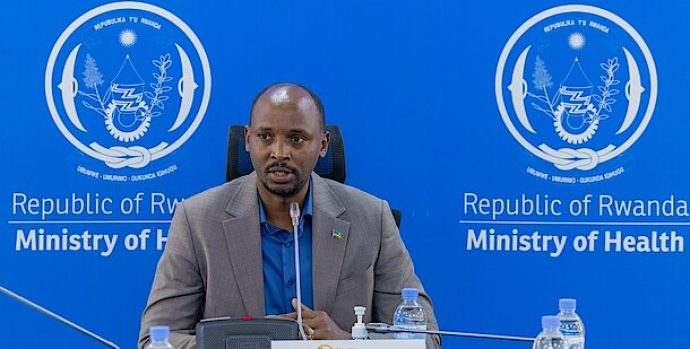
Across different provinces of Rwanda, 10 new university-level hospitals (second-level referral) will soon be opened, according to Minister of Health Dr. Sabin Nsanzimana in an interview with RBA, reflecting on Rwanda’s health sector 31 years after liberation.
After the 1994 Genocide against the Tutsi, the number of medical doctors in the country was very low while Rwanda was battling multiple diseases. This led to the creation of a community health worker system which significantly reduced deaths caused by diseases.
Dr. Nsanzimana said:
“At that time, malaria was widespread, there were no mosquito nets, no effective medicine. Around 60,000 people were trained nationwide and provided with equipment. Their major contribution was preventing genocide survivors from dying of malaria and other illnesses.”
He added that the health system continued to expand and gained capacity, now being able to monitor chronic diseases such as high blood pressure.
In addition to the shortage of doctors, medical infrastructure was another area that saw major investment over the last 31 years.
Currently, Rwanda counts around 1,200 health posts, which did not exist before.
There are also 510 health centers, up from just 100 in 1994. Today there are 57 hospitals and 6 university teaching hospitals.
Minister Nsanzimana noted that to improve healthcare delivery, hospital construction is ongoing across the country.
He said:
“When you have the doctors and the equipment, what remains is the infrastructure. Some hospitals are being renovated, and now 10 new university-level hospitals will be opened in the provinces.”
Currently, King Faisal Hospital, Kanombe Military Hospital, and CHUK are also undergoing expansion to accommodate more patients and to meet international standards.