


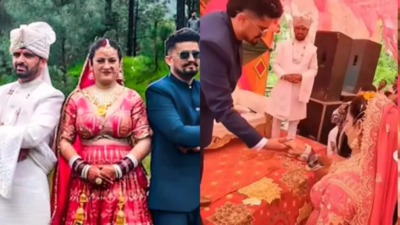
In the Shillai region of Himachal Pradesh, India, a woman named Sunita Chauhan married two brothers, Pradeep and Kapil Negi, in a rare traditional wedding ceremony known as Jodidara.
The celebration began on July 12, 2025, in Trans-Giri, Sirmaur district, and was attended by hundreds of people from various places.
It featured traditional songs, dances, and ancestral rituals from the Hatti community, an indigenous tribe that was officially recognized as underprivileged three years ago.
Sunita said she willingly married the two brothers without any pressure and expressed gratitude for the unity between their families.
Pradeep works in the public sector while Kapil works abroad. Both stated that they chose to make the marriage public out of pride in their union and deep love for the woman they share.
According to experts and cultural leaders from the community, this type of shared marriage was originally introduced to avoid dividing family land.
When brothers marry the same woman, the family land remains intact, which helps maintain the family’s stability and long-term wealth. It also served to strengthen sibling bonds, protect family security, and ensure cultivation of land in different locations.
In the “Jajda” ritual, the bride is taken to the groom’s home, receives a blessing from a figure called “Seenj,” and the traditional spiritual leader prays for the couple, sprinkles them with holy water, and gives them raw sugar as a symbol of harmony and love.
Although this tradition is fading due to modernization and education, it still exists either secretly or, as in Sunita and the Negi brothers’ case, openly.