The Trump administration has announced a bold shift in its foreign policy approach in Africa: prioritize trade, leverage the competitive edge of American companies, and reinforce U.S. economic influence on a continent where China is deeply entrenching itself. This strategic pivot aims to create key opportunities for trade and reshape how U.S. diplomats are evaluated in Africa.
According to Christopher Landau, U.S. Assistant Secretary of State, the focus is now crystal clear: “Trade investment is now the cornerstone of foreign policy.” Diplomacy, he asserts, must provide concrete benefits to American companies and workers.
Reportedly, the U.S. State Department has deployed over 1,000 business staff to American embassies worldwide to support economic players in engaging with the U.S. government. “We are a business-ready administration,” Landau said.

“Trade, Not Aid”
Troy Fitrell, Director of the Africa Bureau, echoed this vision during a recent mission to West Africa. He emphasized that Africa holds massive untapped potential: by 2050, the population will reach 2.5 billion, with a purchasing power projected to exceed $16 trillion. Despite this, only 1% of all U.S. exports go to Africa.
It’s time for change, according to RFI’s report. Fitrell stated, “We no longer see Africa as a continent to be helped, but as a full partner.” The new mantra: “Trade, not aid.” The U.S. aims to increase exports, attract American investment, and build shared development.

As a result, ambassadors will now be selected based on their ability to assist American firms and close deals. The first results are promising: 33 deals worth $6 billion have been signed within 100 days.
The upcoming U.S.-Africa Business Summit will further validate this strategy and open a new chapter in U.S.-Africa economic cooperation.

Washington Eyes Africa’s Critical Minerals
One of the top U.S. priorities under this policy shift is the Great Lakes region, particularly the Democratic Republic of Congo (DRC) and Rwanda. While peace talks continue for Eastern DRC, the U.S. is pushing forward economically, especially in mining. The U.S. has publicly acknowledged its interest, signing principles between the DRC and Rwanda with its direct involvement—mainly to protect its interests in mineral extraction.
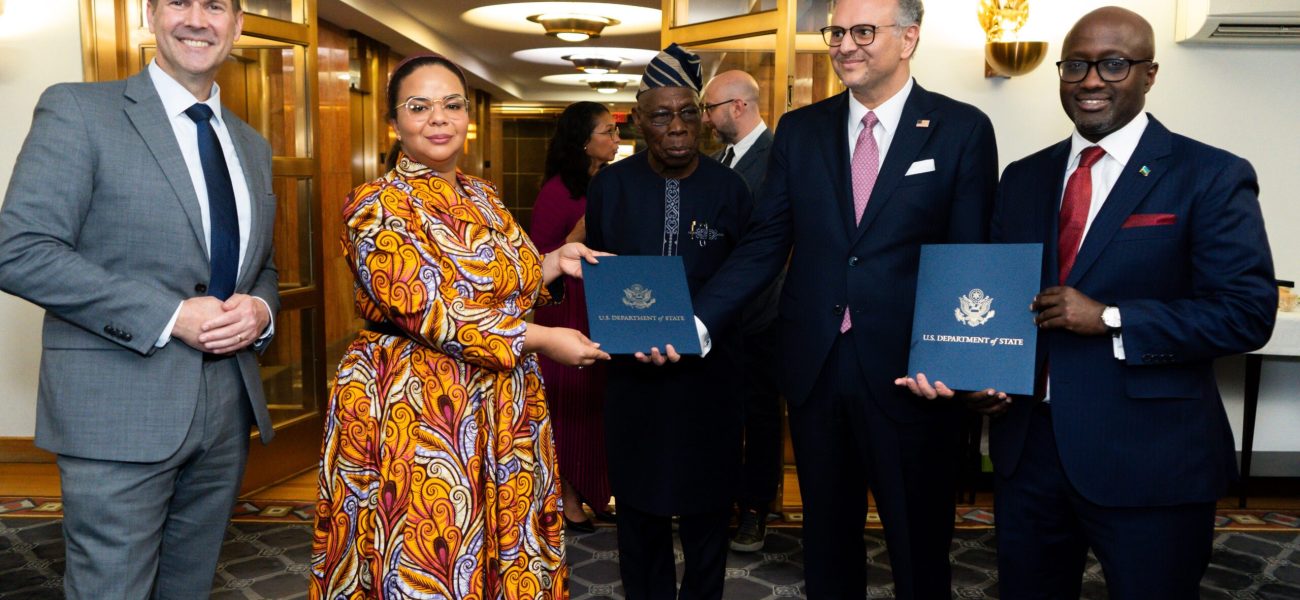
Just 20 days after those principles were signed, Kim Harrington, Acting Deputy Secretary for Energy Resources, attended the signing of a partnership agreement on May 13 with Trinity Metals, a leading mining company in Rwanda focused on tungsten, tantalum, and tin (3Ts), alongside American investors.


The goal is to establish a supply chain between Rwanda and the United States. Fitrell confirmed to RFI that things are moving faster than expected: “If you wait for perfect deals, it will take 30 years.” He added, “We can’t afford to wait six months or a year. We must act now.” For him, “Things are shifting,” and “much work is happening behind the curtain.” But he warns: “Nothing is more expensive than war.”
He urged both Rwanda and the DRC to prioritize economic cooperation urgently.
Fitrell also clarified that the U.S. was not an unsolicited party in the Rwanda-DRC issue: “Both sides, Rwanda and DRC, requested America’s involvement.”

As the article concludes, Rwanda already processes minerals like tin, tantalum, and gold, giving it an edge in negotiations. But in the DRC, this progress is raising concerns. Some voices within the Congolese government are calling for experienced experts to lead economic talks from now on to ensure national interests are safeguarded in upcoming agreements.