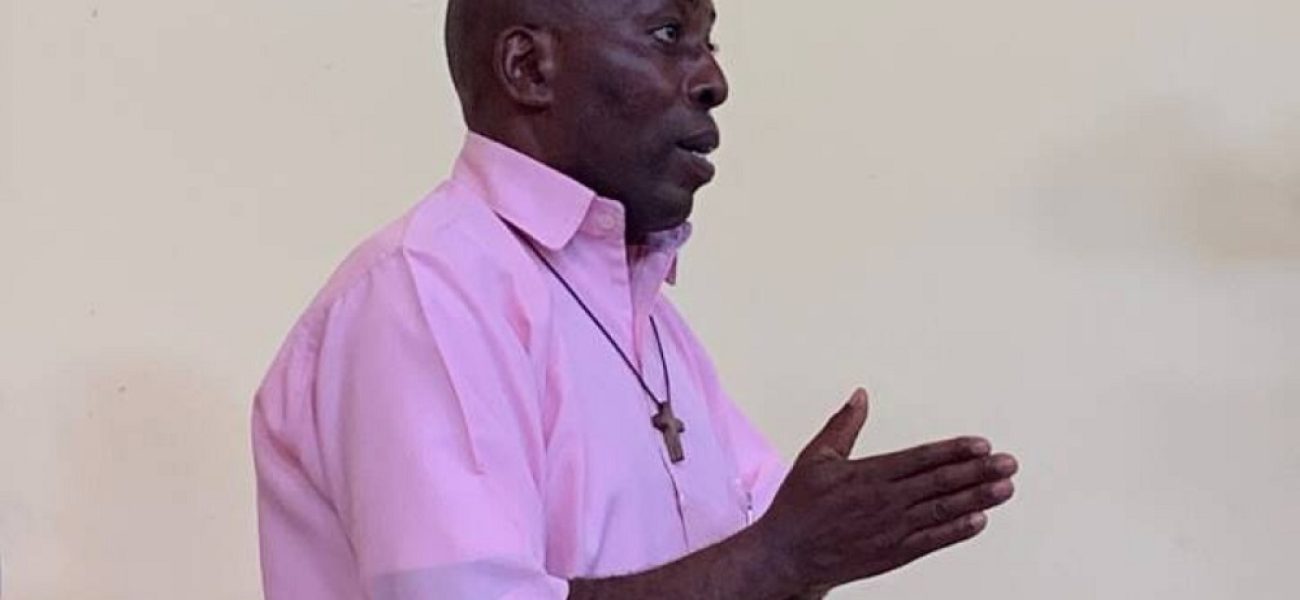
After being tried in Rwanda, Wenceslas Twagirayezu, who was suspected of involvement in the 1994 Genocide against the Tutsi and extradited to Rwanda, will now serve his 20-year prison sentence in Denmark.
This follows a ruling on June 10 by the Hillerød Court in Denmark, which formally upheld the verdict issued by Rwanda’s Court of Appeal in July 2024.
Twagirayezu, 57, a former teacher originally from Rwanda, had been living in Denmark since 2002 and obtained Danish citizenship in 2014. He was extradited to Rwanda in 2018 to face charges of genocide and crimes against humanity.
He was accused of playing a role in the Genocide against the Tutsi in 1994, particularly in Rubavu District, where he was alleged to have organized and participated in attacks that led to the deaths of hundreds of people.
Rwanda’s Court of Appeal convicted him on July 31, 2024, overturning a previous ruling by the High Council for International Crimes (HCCIC) which had acquitted him. The new ruling highlighted his direct involvement in massacres in Busasamana and Gacamena, attacks on Tutsi at Mudende University, and killings of students from Saint Fidèle school who had been taken to Nyundo.
Following his conviction in Rwanda, he was returned to Denmark under a prisoner transfer agreement between the two countries.
Why will he serve his sentence in Denmark?
Speaking to The New Times, Faustin Nkusi, spokesperson for Rwanda’s National Public Prosecution Authority, explained that Rwanda had assured Denmark that it would return Twagirayezu to serve his sentence there if convicted, in order to secure his extradition.
Nkusi stated: “When someone is extradited or deported, agreements are usually signed outlining legal guarantees. In this case, one of the guarantees we provided was that regardless of the verdict—whether guilty or not—he would be returned to Denmark to serve his sentence.”
He added that the principle of respecting international sentences, known in legal terms as “execum,” requires the receiving country’s court to formally recognize a foreign judgment before it can be enforced locally.
For that reason, Danish prosecutors submitted the Rwandan court’s decision to the Hillerød Court for acknowledgment and implementation.