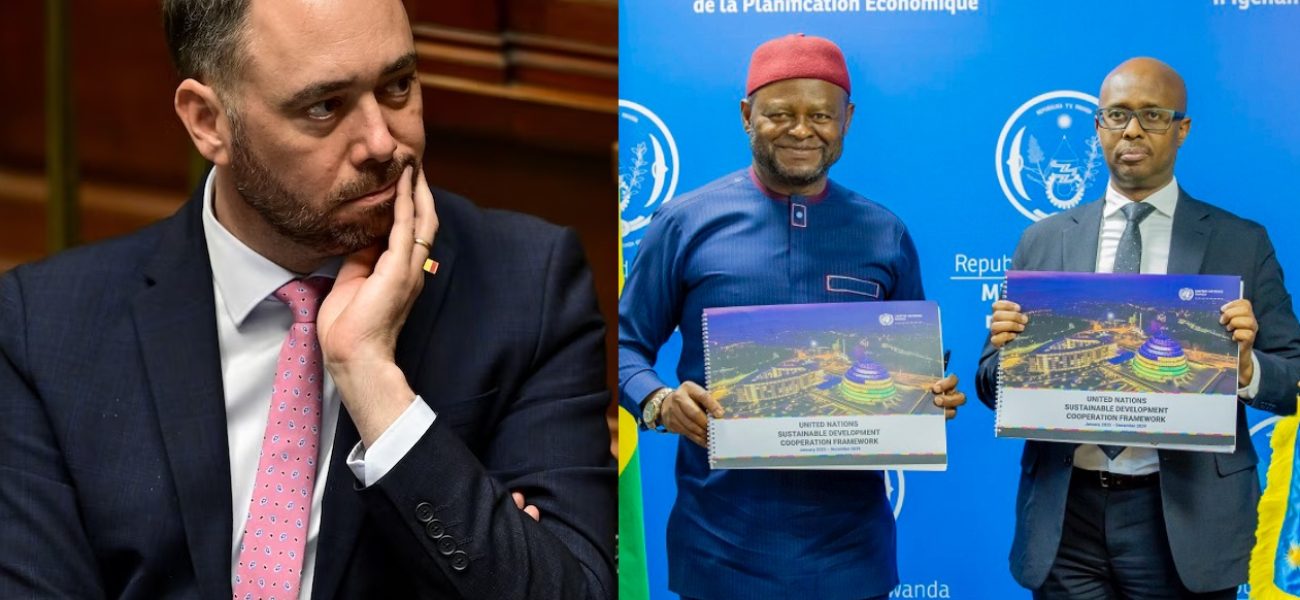
Rwanda has signed a landmark agreement with the United Nations under the United Nations Sustainable Development Cooperation Framework (UNSDCF), securing funding more than five times greater than what Belgium used to provide.
In recent years, Rwanda had partnered with Belgium through various development projects, which amounted to €180 million over five years (2024–2029). However, Rwanda recently announced that it would reject any aid from Belgium, sparking concerns among analysts about the potential consequences for the country’s development trajectory.
Despite this, Rwandan officials assured the public that the country would not be affected by the withdrawal of Belgian aid, emphasizing that alternative global partners were ready and willing to collaborate with Rwanda on major development initiatives.
Now, the United Nations has stepped in with a $1.04 billion commitment to support the Rwandan government’s development agenda over the next five years (2025–2030), effectively filling and surpassing the gap left by Belgium.
International institutions such as the World Bank, the International Monetary Fund (IMF), and the United Nations have consistently praised Rwanda for its efficient and transparent use of foreign aid. The country is known for its strong anti-corruption measures and strict accountability mechanisms, especially in infrastructure development—where it ranks third in Africa for having some of the continent’s best roads.
The UN’s funding will not only replace the Belgian aid but also compensate for other suspended funding sources. The support will focus on:
-
Economic development
-
Human capital enhancement
-
Transformational governance
-
Gender equality
-
Climate change mitigation
-
Innovation and creativity
Rwanda has a long-standing partnership with the UN in implementing its National Strategy for Transformation (NST 1 and 2). The Vision 2050 agenda aims to make Rwanda a middle-income economy through innovation, increased industrial investment, reduced import dependency, modernization of agriculture, promotion of tourism, and improvement of the national healthcare system.
Many analysts commenting on the UN-Rwanda deal quickly linked it to Belgium’s terminated aid, with several concluding that Rwanda had emerged victorious, countering attempts by critics who doubted the country’s capacity to thrive independently.