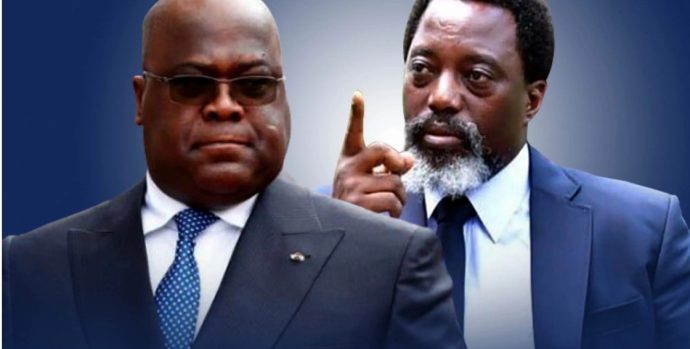
Former Congolese President Joseph Kabila has broken his six-year silence, delivering a speech that has sent ripples through Kinshasa’s political landscape. Known for his reserved demeanor, Kabila’s reemergence comes at a time when the Democratic Republic of Congo (DRC) faces significant challenges, including ongoing conflicts and political instability.
Kabila, who led the DRC for 18 years, navigated the country through complex conflicts, including the Second Congo War and the defeat of the M23 rebellion in 2013. His recent speech highlighted perceived weaknesses in President Félix Tshisekedi’s administration, particularly in areas of politics, security, social welfare, economy, and democracy. Kabila also proposed solutions to the nation’s pressing issues.
The speech has reportedly unsettled President Tshisekedi’s advisors, who are already grappling with the challenges posed by the M23 rebel group. Kabila’s political maneuvers add another layer of complexity to the situation, potentially igniting a new political battlefront.
Observers note that Kabila’s influence has waned over time, with former allies distancing themselves. The Southern African Development Community (SADC), once a potential ally, has withdrawn support in the fight against M23. In response, President Tshisekedi may seek to mend ties with Rwanda to counter Kabila’s resurgence, though past diplomatic tensions could complicate this strategy.
Kabila’s announcement of a planned visit to Goma, a stronghold of the M23 rebellion, is seen as a bold move that could further strain relations with the current government. His actions may influence ongoing international discussions aimed at resolving the DRC’s conflicts, including talks in Doha and Washington.
As Kinshasa braces for potential political upheaval, the international community watches closely, aware that the DRC’s stability has far-reaching implications for the region.