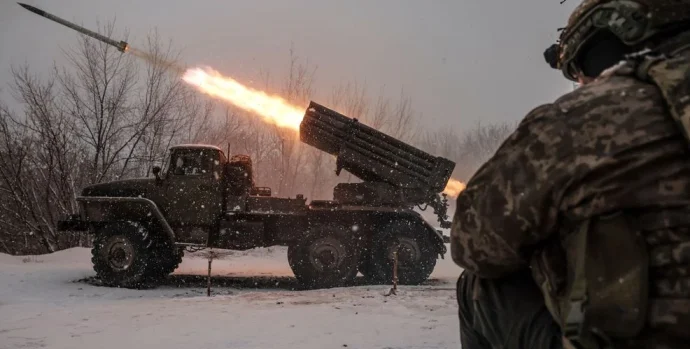
The Ukraine–Russia war has entered its third chaotic year, claiming many lives on both sides, devastating infrastructure, and disrupting the global economy.
In 1991, when the Soviet Union dissolved, its former republics, including Ukraine, gained independence and separated from the USSR.
In the following years, 1993–1994, agreements were signed between Russia, Kazakhstan, Belarus, and Ukraine—with support from the U.S. and U.K.—in which the former Soviet republics agreed to return nuclear weapons to Russia and commit to respecting each other’s sovereignty.
By 1997, Ukraine and Russia agreed on division of control over areas of the Black Sea: Russia won rights to 87% control at Sevastopol port, while Ukraine received a $2.5 billion compensation package over 20 years.
In 2003, Russia, Ukraine, Kazakhstan, and Belarus signed a trade union agreement. Under that deal, Russia invested in major mineral and agricultural industries in eastern Ukraine.
That same year, Russia launched a gas pipeline through Ukraine supplying Eastern and Central Europe.
The Turning Point
In 2004, Ukraine’s presidential election became a flashpoint. The West-backed candidate Viktor Yushchenko faced Viktor Yanukovych, who was pro-Russia. After disputed vote counting and a court-ordered rerun, Yushchenko won. He favored closer ties with Europe and NATO, shifting away from Russia.
In response, Russia in 2005 built a Baltic Sea pipeline, bypassing Ukraine entirely—a sign of what became known as “the gas war.”
By 2008, NATO proposed that Georgia and Ukraine would one day join the alliance; this was resisted by some member states wary of antagonizing Russia.
In the winter of 2009, Russian energy giant Gazprom shut down pipeline flow through Ukraine when users defaulted on payments—crippling Europe’s gas supply.
In 2009, President Yushchenko promised that if reelected, he would nullify the Sevastopol port agreement with Moscow.
Yanukovych’s Return & the Crimea Crisis
In 2010, pro-Russia Viktor Yanukovych won the presidency, despite legal challenges. He extended the Sevastopol port deal until 2045 and signed new trade agreements with former USSR states. He also granted Russian language rights in eastern Ukraine.
In 2013, Yanukovych canceled the EU Association Agreement, sparking massive protests in Kyiv supported by the West. In early 2014, he fled to Russia.
Back in Ukraine, the parliament revoked Russian-language status and shelved Moscow-friendly laws—triggering unrest in Eastern Ukraine.
In February–March 2014, unmarked troops occupied Crimea’s Simferopol airport and seized control. A month later, Crimea declared independence, and 97.9% of Crimean residents voted to join Russia.
War in Donbas
On April 7, 2014, pro-Russian militants in Donetsk declared independence. Ukrainian forces responded with military intervention. By April 27, the self-proclaimed Luhansk Republic followed Donetsk.
In May 2014, a deadly assault on pro-Russian activists in Odessa resulted in a building fire that killed 48. No one has been held accountable for the atrocity.
President Petro Poroshenko, elected in 2014, launched operations to retake breakaway regions. He succeeded partly—but Russia sent support forces under “volunteer” cover. Moscow denied official involvement, calling them private fighters.
This led to two rounds of Minsk ceasefire agreements, mediated by France and Germany. The ceasefires held briefly—leading to the current stalemate.
👉 Stay tuned for Part 2, where we’ll explore NATO’s involvement and how the conflict continues to escalate today.