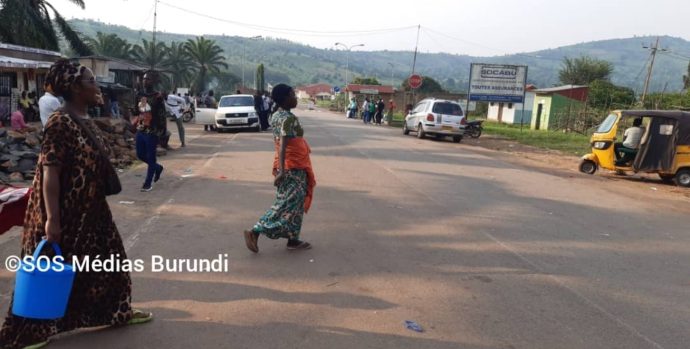
The prolonged closure of the border between Burundi and Rwanda has caused an unprecedented economic and humanitarian crisis in Burundi’s northern regions. In Bugabira, Ntega, and Busoni (former Kirundo Province), and Nyamurenza (former Ngozi Province), residents decry worsening conditions marked by hunger, insecurity, and deepening poverty.
Since diplomatic relations between Gitega and Kigali deteriorated, cross-border trade — which had long sustained thousands of households — has come to a complete halt. In these rural communities, small-scale trade has collapsed, leaving many with no source of income.
“We used to take chickens to sell in Rwanda and come back with secondhand clothes to sell in our local markets. That’s how we survived — and now it’s all gone,” said a discouraged woman trader from Nyamurenza.
This commerce, largely driven by women, was a pillar of the local economy. Its sudden loss has triggered widespread impoverishment, significantly increasing the number of vulnerable households, according to SOS Médias Burundi.
Families Struggle, Children Drop Out of School
Beyond trade, many Burundians used to cross into Rwanda to work on farms, attracted by daily wages sometimes three times higher than those paid in Burundi.
The stronger value of the Rwandan Franc compared to the Burundian Franc (Fbu) made these jobs particularly appealing. The border closure cut off this vital source of income, with serious consequences for many families — as one mother of six from Busoni shared.
In these difficult times, residents are urging the Burundian authorities to reconsider their stance on foreign relations.
“We are not involved in politics. We just want to work and survive. Please reopen the border,” pleaded a merchant in Ntega.
While waiting for relations between Gitega and Kigali to improve, border communities are doing their best to cope — but uncertainty and suffering persist.