

Democratic Republic of Congo President Félix Tshisekedi has issued new instructions to the Armed Forces of the DRC (FARDC) and security services to protect the country's territorial integrity, civilians and property amid growing concerns following former President Joseph Kabila's emergence at the helm of a new politico-military movement.
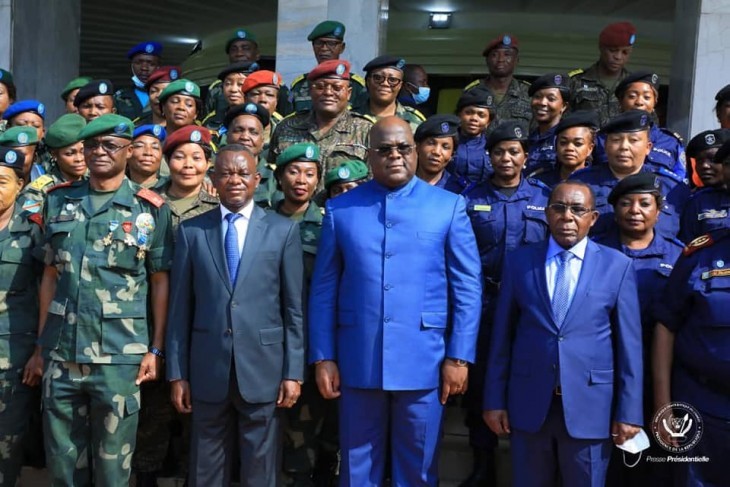
The directives were issued during a meeting of the Supreme Council of Defence and Security chaired by Tshisekedi in Kinshasa on October 14, 2026.
FARDC spokesperson Major General Sylvain Ekenge said the president, who is also the commander-in-chief of the armed forces, gave clear instructions aimed at ensuring that the military and security services effectively fulfil their responsibilities.
The instructions focused on safeguarding the country's territorial integrity and protecting civilians and their property. However, no detailed operational measures or specific new military campaign were announced.
The meeting came two days after Kabila's newly established Front pour la Refondation de la Nation (FRN) announced that it had replaced the Alliance Fleuve Congo (AFC), the political-military coalition associated with the M23 movement fighting the Congolese government.
The FRN brings together Kabila and senior figures associated with the AFC/M23, including Corneille Nangaa, Bertrand Bisimwa and Major General Sultani Makenga, who has been identified as the movement's military chief.
The establishment of the FRN has raised questions about the future of the conflict in eastern DRC, where M23 has seized control of key areas, including the cities of Goma and Bukavu.
Kabila ruled the DRC from 2001 to 2019. His emergence at the head of a new politico-military movement opposing the current government adds another dimension to the country's political and security crisis.
The developments also come as peace negotiations between the Congolese government and the AFC/M23 continue under the Doha process, despite persistent fighting in eastern DRC.
In its announcement establishing the FRN, the movement said it would assume all the rights, obligations and commitments previously held by the AFC, including those undertaken during the Doha negotiations.
It remains unclear how the transition from the AFC to the FRN will affect the implementation of commitments made during the peace process.
While Tshisekedi's latest directives emphasise the military's responsibility to defend the country and protect its population, the publicly available information does not establish that the orders amount to a specific new military operation targeting Kabila's movement.