Kenya has heightened surveillance for polio following an outbreak reported in Malawi last week.
Amid rising concerns over the risk of a potential re-introduction of polio in the African continent, a Kenyan Ministry of Health expert has assured the public that there is nothing to worry about.
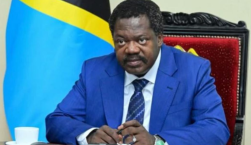
At the same time, however, Director-General of Health Patrick Amoth said that although the country has always been on a high alert of a potential outbreak especially because of the porous borders it shares with Somalia, which is classified by the international health regulations (IHR) as a state infected with circulating vaccine-derived poliovirus type 2 with potential risk of international spread.
Dr Amoth added that the government has increased its surveillance for the highly contagious disease.
The reasons for heightened scrutiny follow the discovery of the disease in Malawi that has left a three-year-old girl paralysed.
According to the World Health Organization’s regional office for Africa (WHO Afro), the case announced Thursday last week resulted for a wild poliovirus imported from Pakistan.
According to the global polio eradication initiative (GPEI), detection of even a single case of polio anywhere in the world is considered an outbreak. As soon as the polio surveillance system sounds the alert that a virus has been found, an outbreak response springs into action.
“The outbreak in Malawi means a lot not only for Kenya but also Africa. Although it is not a source of worry, we have to enhance our surveillance because of our global connectivity. We do not know how many people have come into contact with the genotype in Pakistan,” noted Dr Amoth.
He added that among the things the surveillance will be keen to detect are cases of children with floppy limbs occasioned by the onset of weakness or paralysis with reduced muscle tone, a condition known as acute flaccid paralysis, the gold standard for detecting cases of poliomyelitis.
“We are also carrying out environmental analysis of sewer samples in Mombasa and Nairobi,” he said.
“The last case of wild polio virus in Africa was identified in northern Nigeria in 2016 and globally there were only five cases in 2021. Any case of wild polio virus is a significant event and we will mobilise all resources to support the country’s response,” said Dr Modjirom Ndoutabe, Polio coordinator in the WHO Afro.
Africa was declared free of indigenous wild polio in August 2020 after eliminating all forms of wild polio from the region.
WHO Afro said the current case in Malawi does not affect Africa’s wild poliovirus-free certification status
As for Kenya, the country has been free of any wild poliovirus (WPV) circulation since 2014. However, the country and the horn of Africa region continues to be at higher risk of polio due to low immunisation coverage magnified with population movement.
Dr Amoth explained that most of the country mid-last year carried out a campaign to vaccinate children under five years in 13 high risk counties after surveillance teams confirmed six cases of poliovirus in early February from sewerage materials in Garissa and Mombasa.
No wild type polioviruses and circulating vaccine derived polioviruses (cVDPVs) were reported in Kenya in 2021. However, a recent study by the Kenya Medical Research Institute (Kemri) detected vaccine-derived poliovirus from sewer samples in Mombasa’s Jomvu site in November collected during environmental surveillance of polioviruses.