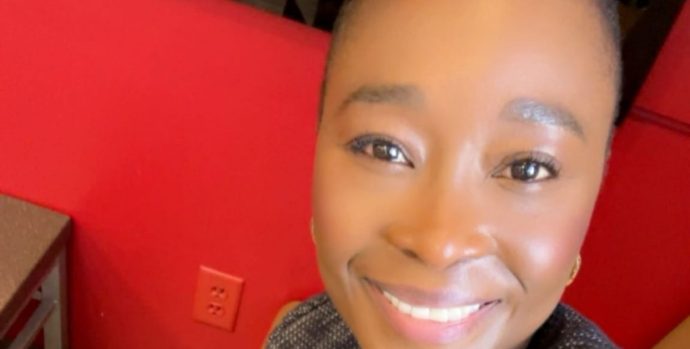
One year ago today, on the afternoon of September 30, 2024, businesswoman Gisèle Busima walked into her office in Gombe, the high-end district of Kinshasa. She did not walk out freely.
According to her official complaint filed in both Belgium and the United States earlier this year, Busima was forcibly taken from her office by men linked to DRC’s military intelligence, reportedly under the direction of Colonel Ralph Muzimba. Neither warrant was shown nor charges were read. Her phone was confiscated. For the next 45 days, she disappeared.
Today marks the anniversary of what she describes as a “state-sponsored abduction” — an ordeal that has sparked diplomatic concern, human rights outcry, and raised pressing questions about power, espionage, and gender politics in one of Africa’s most turbulent political landscapes.
“They wanted me silent.”
In her first interviews following her release in late November 2024, Busima described being detained in a clandestine facility — allegedly the Castello Hotel in Kinshasa, believed to serve as an unofficial intelligence holding site.
“I was locked away with no access to a lawyer, no medical care, and no contact with my family,” she told international media. “They interrogated me daily. They accused me of being a spy for Rwanda — of being Rwandan — and of collaborating with Corneille Nangaa, who they claimed was plotting to topple President Tshisekedi’s regime.”
The accusations centered on her alleged links to Nangaa — the former head of the DRC’s electoral commission turned opposition figure — and supposed communications with individuals affiliated with the M23 rebel movement, currently active in eastern Congo. She denies any ties to espionage or subversion.
“My father worked and sacrificed his life to build the DRC. My father is not Rwandan, and my mother is not Rwandan.”
A Tangled Web of Politics and Power
At the center of the controversy are two powerful names: Patrick Muyaya, the Minister of Communication and Government Spokesperson, and General Christian Ndaywel, a senior figure in Congolese military intelligence.
Busima alleges that the operation to detain her was orchestrated by both men — with Muyaya driven, she says, by a long and complicated personal relationship that ended badly.
She claims that Muyaya, her former romantic partner, used state power as part of a political retaliation — and a personal vendetta.
Busima says she has a list of 50 journalists whom Muyaya allegedly bribed to destroy her reputation.
“Muyaya, I have the list of all the journalists and the people who paid $100 each to smear my name. The damage is done. You ruined everything. There are no words to describe how I feel about you. You don’t do that to someone you spent four years of your life with,” she protested.
Gisele also calls on Muyaya to be arrested and placed under detention like his two complices from DRC army who are accused the plott to assasinate President Tshisekedi.
Government Silence
Government sources have offered little clarity. In limited statements, officials have denied any illegal detention, suggesting instead that Busima was merely “questioned” as part of a national security investigation.
But no charges were ever filed. No official statement was made. And Busima was released quietly — no trial, no clearance, no explanation.
A Legal Fight Beyond Congo’s Borders
Unable to seek justice through the Congolese judicial system, Busima took her case abroad. In January 2025, she filed a complaint with the Belgian Federal Prosecutor’s Office, citing unlawful detention, abuse of power, and violations of international human rights law.
She has also retained legal counsel in the United States, where she holds dual citizenship, and has reportedly contacted UN human rights bodies.
Human rights observers have raised serious concerns.
“This is a textbook example of arbitrary detention,” said a spokesperson for the African Centre for Justice and Accountability.
“If someone can disappear in the capital city, held incommunicado by agents of the state, it sends a chilling message to every citizen.”
“Muyaya Must join his accomplices in Prison”
Despite all she’s endured, Busima is demanding an apology from Minister Patrick Muyaya — and joins both General Ndaywel and Colonel Muzimba who are accused of plotting against president Tshisekedi.
“Have the courage to go to your Twitter account (now X) and apologize to me. Tell the world what you did. When you had me arrested, you promised to leak fake videos of me and my boyfriend from Brazzaville. You hacked my phone. You confronted me. The messages are still there. Ask your friend Ndaywel — now in prison — how he harassed me.
You called me names because I ended the relationship that I had initiated. You even published my pictures with Kagame, Katumbi, and Kabila — people I deeply respect. What kind of stupidity is that?”
“It’s time for Muyaya to join his accomplices in prison.”
Despite all she’s been through, Busima demands a public apology from Minister Patrick Muyaya — or join in prison General Ndaywel and Colonel Muzimba accused of plotting against the president Tshisekedi.
“Have the courage to go on your Twitter (now X) account and apologize publicly. Tell the world what you did. When you had me arrested, you promised to release fake videos of me and my boyfriend in Brazzaville. You hacked my phone. You confronted me. The messages are still there. Ask your friend Ndaywel — now in prison — how he harassed me.
You insulted me because I ended a relationship that I initiated. You even published my photos with Kagame, Katumbi, and Kabila — people I deeply respect. How stupid.”
She recalled how she had tried to stop Muyaya from publishing defamatory articles about former President Kabila’s family, warning him that such actions would eventually turn against him.
“I told you once, when you started publishing articles about the Kabila family — I told you at my house not to do that. I warned you that the worst would come on you. Do you even know who’s going to write about you tomorrow?” she recalled, adding: “Even President Tshisekedi knows Patrick has no loyalty — that’s why he must join Ndaywel and Muzimba in prison.”
A Call to the President
Busima is also calling on President Félix Tshisekedi to personally examine her case and to acknowledge her Congolese identity, rejecting the Rwandan nationality accusations.
“Mr. President, ask the people who know my family. I never plotted against you. I never financed M23 or anyone else. I didn’t plan anything.”
Beyond One Woman’s Story
For many Congolese, Gisèle Busima’s ordeal has become symbolic of larger fears — about unchecked power, the weaponization of intelligence services, and the fragile state of legal protections in the country.
“She’s not the only one,” said a Kinshasa-based lawyer familiar with similar cases.
“What’s unusual is that she had the resources and international ties to make noise. But there are dozens — maybe hundreds — who don’t.”
Since her release, Busima has relocated abroad, citing ongoing threats to her safety. She continues to pursue legal avenues and international advocacy — not just for personal justice, but to call for systemic reform.
“I survived,” she says. “But I will not be silent. Because the next woman might not come back.”
A Reckoning Still to Come
One year on, the facts remain contested, and justice remains out of reach. But as Congo enters another politically sensitive period — with continued tensions involving Rwanda, rebel groups, and internal dissent — the Busima case casts a long shadow.
It is a story of what happens when intelligence becomes personal, when justice becomes selective, and when silence is enforced through fear.
And it serves as a reminder that in the DRC — as in many places — truth is often the first casualty of power.
Let me know if you’d like this formatted as a PDF or article draft, or if you’d like help submitting it for publication.